

Designing Critical Medical Inventory Spaces: What Looks Right on Paper vs What Works in Practice
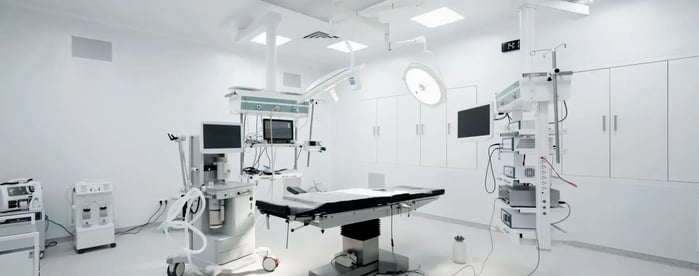
If you’ve spent any time on healthcare projects recently, you’ve probably felt the shift. Storage isn’t just a room you size and move on from; it actually becomes a system that can make or break operations. And the uncomfortable part is that when something goes sideways, it usually traces back to decisions that felt reasonable at the time. A value-engineered redundancy. A layout that looked efficient on paper. A coordination gap that didn’t seem critical in design. That’s the context you’re working in now, and the goal is to make decisions you can stand behind when the building is fully loaded and fully operational.
Where Redundancy Actually Pays Off
Everyone in the room agrees redundancy is important, but the disagreement is always about how much and where. From an engineering standpoint, the most useful shift is to stop treating redundancy as a design feature and start treating it as exposure control. Because, at the end of the day, that’s what it is. You’re not protecting systems, you’re protecting outcomes.
Once you frame it like that, things change. For instance, a backup refrigeration setup isn’t just a bonus; it’s covering serious risk: inventory, compliance, patient impact. But applying that across the board to everything? Doesn’t really make sense. What you start to appreciate, especially after a few difficult projects, is that selective redundancy is stronger than blanket redundancy. Not just financially, but technically, and you’re putting robustness where failure actually matters. Once you frame it around actual risk, alignment comes a lot easier. You avoid a lot of late pivots and those moments where a “small” decision suddenly looks a lot bigger in hindsight.
Working Inside Existing Hospitals
If you’re doing retrofit work, and most people in this space are, you already know the building has the first move. You walk in with a clean concept, and within days, you’re adjusting for ceiling space that doesn’t exist, infrastructure that can’t be easily modified, and departments that can’t afford disruption. At some point, you stop trying to force the building to comply and start working with it.
That’s where the work becomes more interesting, if you’re willing to approach it that way. Instead of asking, “How do we fit the ideal system in here?” the better question becomes, “What level of performance can this building realistically support, and how do we get as close to that as possible?” That might mean breaking environmental control into smaller zones instead of relying on a central system that can’t deliver consistently. It might mean accepting that the footprint won’t grow, so density has to. It often means coordinating more closely with storage strategies than you expected to at the outset.
And there’s a practical benefit to leaning into those constraints early: you avoid the slow drift toward compromise that happens when designs look good in drawings but don’t survive contact with the field. The more honest the design is about the building’s limitations, the fewer surprises show up later.
The Pressure of Getting It Right the First Time
New construction gives you control, but it also removes excuses. In other words, when everything is being built from scratch, expectations rise, especially around flexibility and longevity. No one wants to hear that a five-year-old facility can’t accommodate new inventory types or updated storage requirements.
So the challenge shifts. You’re no longer reacting to constraints; you’re anticipating them. What tends to matter most here isn’t oversizing everything; it’s making sure the system can adapt. That requires a different kind of coordination early on. Storage density, airflow, cooling loads, and power distribution, these aren’t separate conversations. They’re tightly linked, whether the drawings reflect that or not. If you’ve seen projects where that alignment didn’t happen, you know how it ends: systems that technically meet spec but struggle under real use, or spaces that require workarounds almost immediately after occupancy. Getting ahead of that comes down to making sure the assumptions you’re designing around are actually shared across disciplines.
Coordination Isn’t a Process Step—It’s the Work
Most coordination issues don’t come from a lack of expertise but from timing. Decisions get made in isolation because everyone is moving fast, and by the time conflicts surface, they’re expensive to fix. Storage gets denser after the mechanical design is set. Electrical requirements expand after ceilings are already crowded. Access gets compromised because no one fully owns it.
You’ve probably been in those meetings where everyone is technically correct, and the project still doesn’t quite work. The projects that run better tend to have one thing in common: someone pushed for alignment earlier than was comfortable. From an engineering perspective, that’s where you protect your design. When airflow, access, maintenance, and monitoring are considered together, not sequentially, you spend less time fixing problems and more time refining performance.
Storage Systems Are The Driver of Everything Else
One of the more underrated shifts in these projects is how much medical storage systems influence engineering outcomes. It’s easy to think of shelving, casework, or mobile systems as something that comes later. But once those decisions are made, they shape airflow, heat loads, access patterns, and even how the space is actually used day to day. If you’ve ever had to adjust a system after storage was finalized, you know how limiting that can be. On the other hand, when medical storage systems are part of the conversation early, things start to line up. Density decisions inform mechanical design. Layouts support both workflow and serviceability, and flexibility gets built in, not added later. You don’t need to overcomplicate it; you just need to treat storage as a design input.
Why This Matters Beyond the Drawings
At a certain point in your career, the focus shifts to how a system performs when no one is watching, when the building is busy, when loads fluctuate, when something fails. That’s where these decisions show up. The trade-offs you made around redundancy. The assumptions you accepted in a retrofit. The coordination you pushed for—or didn’t. The way storage was integrated into the system. None of it is abstract at that stage.
And that’s ultimately what you get out of approaching these projects with more intention. Not just cleaner drawings or better construction phases, but systems that hold up under pressure, and fewer moments where you’re revisiting decisions you wish had been handled differently. That’s the kind of work people remember.

Anuj Srivastava
Anuj Srivastava is a principal partner at NY Engineers. He is known for his MEP franchise market knowledge. Anuj is currently leading a team of 100+ MEP/FP engineers and has successfully led over 1500 franchise projects in the US.
Discuss Your Project With Our Engineers

Join 15,000+ Fellow Architects and Contractors
Get expert engineering tips straight to your inbox. Subscribe to the NY Engineers Blog below.