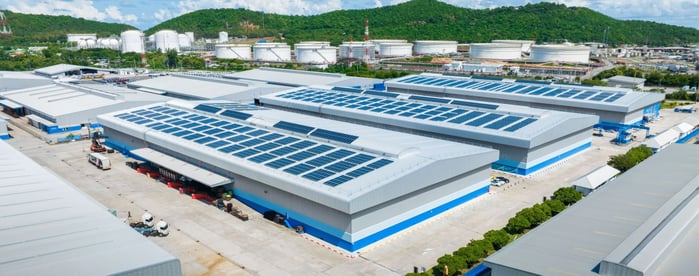
As automotive manufacturers continue expanding production capacity, many developers are choosing warehouse-to-automotive facility conversion projects instead of constructing new buildings from the ground up.
Existing warehouses often provide large floor plates, strategic locations, and faster project timelines. However, what appears to be a cost-effective solution can quickly become complicated when critical building systems are evaluated.
The reality is that converting a warehouse into a manufacturing facility requires far more than installing production equipment. Automotive operations introduce significantly different HVAC, electrical, plumbing, utility, and fire protection demands that many warehouses were never designed to support.
According to the U.S. Department of Energy, industrial facilities account for nearly 33% of total U.S. energy consumption, making infrastructure planning a critical component of facility conversions.
Before launching an automotive production operation, owners should understand the hidden MEP challenges that can impact schedules, budgets, permitting, and long-term operational efficiency.
What Are the Biggest Challenges When Converting a Warehouse Into a Manufacturing Facility?
One of the most common questions facility owners ask is:
"Has anyone converted a warehouse into a manufacturing plant successfully?"
The answer is yes—but successful projects begin with a detailed assessment of existing building systems.
Most warehouses are designed primarily for storage and distribution activities. Automotive production environments introduce:
- Higher power loads
- Continuous equipment operation
- Specialized ventilation requirements
- Compressed air systems
- Process utilities
- Enhanced fire protection systems
These requirements often reveal hidden warehouse conversion challenges that remain unnoticed until design or construction begins.
Common issues include:
- Insufficient electrical infrastructure
- Inadequate HVAC capacity
- Limited utility distribution
- Fire code compliance gaps
- Structural limitations for manufacturing equipment
Without proper industrial MEP engineering, these deficiencies can create costly redesigns and construction delays.
What MEP Systems Need Upgrades During Warehouse Conversion?
HVAC Challenges in Automotive Manufacturing Facilities
One of the most underestimated aspects of automotive facility MEP design is HVAC.
Many warehouse owners discover too late that their existing systems cannot support manufacturing environments.
Common HVAC design issues during warehouse conversion include:
- Poor air circulation
- Inadequate exhaust systems
- Insufficient cooling capacity
- Lack of humidity control
- Employee comfort concerns
Automotive facilities often require specialized industrial ventilation design for:
- Welding areas
- Assembly operations
- Paint preparation spaces
- Battery production zones
- Quality testing rooms
Questions frequently appearing in industry forums include:
"HVAC design for an automotive production facility?"
and
"Why does my manufacturing facility have overheating issues?"
The answer typically lies in improper load calculations and inadequate system sizing during conversion planning.
Proper manufacturing facility HVAC design should account for process heat, equipment loads, occupancy, and future production growth.
Turn Your Warehouse Into a High-Performance Automotive Facility
Avoid costly infrastructure issues with expert HVAC, electrical, plumbing, and fire protection design for efficient automotive operations.

How Do Automotive Plants Handle High Electrical Loads?
Electrical infrastructure is often the highest hidden cost in a warehouse retrofit for a manufacturing project.
Many existing warehouses were never designed for the intensive power demands of automotive operations.
Common electrical upgrades required for automotive plants include:
- Utility service upgrades
- New transformers
- Switchgear replacements
- Power distribution redesign
- Backup power systems
- Equipment-specific circuits
A frequently searched question is:
"How much power does an automotive manufacturing plant require?"
The answer varies depending on production type, automation level, and equipment density.
Comprehensive electrical load calculations for manufacturing facilities are essential before equipment procurement or layout planning begins.
Failing to address industrial electrical design requirements early can lead to utility delays and unexpected project costs.
Utility Infrastructure: The Often Forgotten Challenge
Beyond HVAC and electrical systems, automotive facilities require extensive utility support.
Many Reddit discussions around factory compressed air system design issues highlight how overlooked utility systems become major operational bottlenecks.
Automotive operations commonly require:
- Compressed air systems
- Process piping networks
- Water distribution systems
- Equipment cooling systems
- Waste management infrastructure
Proper compressed air system design for automotive plants is especially important because production equipment often depends on consistent pressure and reliability.
Successful automotive facility utility design ensures production continuity while supporting future expansion requirements.
What Fire Protection Changes Are Required for Automotive Factories?
Fire protection is another critical consideration during industrial building conversion projects.
Warehouses designed for storage occupancy classifications may not satisfy manufacturing-related fire code requirements.
Common fire protection challenges in automotive facilities include:
- Sprinkler system redesign
- Hazard classification changes
- Fire alarm modifications
- Battery storage protection
- Process equipment protection
Questions frequently asked by developers include:
"What fire protection changes are required for automotive factories?"
and
"What building codes apply when converting warehouses into manufacturing facilities?"
Meeting modern automotive manufacturing fire code requirements often requires coordination between fire protection engineers, MEP designers, architects, and local authorities having jurisdiction (AHJs).
Avoiding Costly Mistakes During Warehouse-to-Automotive Conversions
The most successful warehouse-to-automotive facility conversion projects begin with early engineering analysis.
Common mistakes include:
- Underestimating power requirements
- Ignoring ventilation needs
- Delaying utility assessments
- Overlooking code compliance reviews
- Failing to plan future production expansion
A proactive engineering approach helps identify hidden risks before they impact schedules and budgets.
Working with experienced teams specializing in automotive facility engineering, automotive factory MEP design, and industrial facility upgrades can significantly reduce project risk while improving long-term operational performance.
For organizations planning automotive manufacturing projects, evaluating MEP systems early in the design process remains one of the most effective ways to prevent costly surprises.