

The New Data Center Question: Who Pays for the Power Infrastructure?
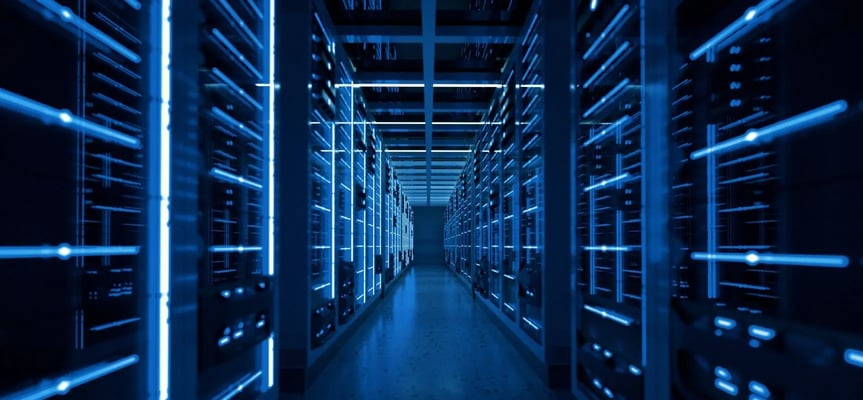
Data center power infrastructure includes the electrical connections, substations, transmission upgrades, and power supply systems needed to support large-scale facilities. The cost of these upgrades may be shared between data center developers, utilities, and other electricity customers, depending on utility agreements, infrastructure requirements, and regulatory decisions.
Data centers are becoming essential to the digital economy, powering everything from cloud computing and enterprise applications to artificial intelligence. But as these facilities grow larger and more power-intensive, a critical question is emerging for developers, utilities, and regulators: who pays for the electricity infrastructure required to support them?
The answer is not always straightforward. While data center operators may pay for dedicated electrical equipment and grid connections, the costs of broader transmission upgrades, new generation capacity, and shared infrastructure can be allocated differently depending on utility tariffs, contracts, and regulatory decisions.
For developers planning new facilities in the United States, understanding these costs early is becoming an important part of site selection, electrical engineering, and project feasibility.
Why Is Data Center Power Infrastructure Becoming a Bigger Issue?
Data center electricity demand is growing as AI workloads, cloud services, and high-performance computing require more computing capacity. However, the electricity infrastructure needed to support this growth cannot always be delivered at the same pace.
According to the U.S. Department of Energy's 2025 Data Center Energy Usage Report, published in June 2026, data centers could account for approximately 11.8% of total U.S. electricity consumption by 2030. The report presents a range of 9.5% to 15.3%, depending on future demand and deployment scenarios.
This growth has implications beyond the data center itself. A proposed facility may require a new utility connection, additional substation capacity, transmission upgrades, or new electricity generation. In areas where existing infrastructure is constrained, these requirements can influence development timelines and project costs.
The challenge is no longer simply securing enough electricity to operate servers. Developers must also understand what infrastructure needs to be built, how quickly it can be delivered, and who will ultimately pay for it.
Who Pays for Data Center Power Infrastructure?
There is no single answer that applies to every U.S. data center project. Responsibility depends on the type of infrastructure required, the applicable utility rules, the project's commercial agreements, and decisions made by regulators.
Three broad categories help explain how these costs can be allocated.
1. Dedicated Electrical Infrastructure
A data center may require dedicated service equipment, transformers, switchgear, substations, or connection facilities to receive power safely and reliably.
Depending on the utility's requirements and the project's agreement, the developer may be responsible for some or all of the costs associated with these dedicated facilities.
These expenses should be evaluated during early project planning rather than treated as minor additions to the construction budget. The electrical infrastructure required to serve a high-demand facility can influence both capital expenditure and the time needed to secure utility approval.
2. Shared Grid and Transmission Upgrades
A different question arises when a data center requires improvements to infrastructure that also serves other customers.
For example, a utility may need to strengthen transmission capacity or expand regional infrastructure to accommodate additional demand. Such investments may benefit multiple users, making cost allocation more complex.
Depending on the applicable regulatory framework, some costs may be assigned directly to the large customer, while others may be recovered through regulated utility rates paid by multiple customer groups.
The Federal Energy Regulatory Commission (FERC) and state public utility commissions have different responsibilities in this process. FERC oversees interstate transmission and relevant wholesale electricity market rules, while state regulators generally oversee retail electricity rates and important aspects of local utility service.
Consequently, the financial impact of a data center project depends partly on where it is located and how the relevant costs are allocated.
3. New Generation and Alternative Power Sources
When existing grid capacity cannot meet a project's requirements, developers may explore additional electricity supply arrangements.
These can include power purchase agreements (PPAs), dedicated generation, or behind-the-meter power systems. A PPA allows a customer to contract for electricity from a particular generator, although the electricity may still be delivered through the wider grid. Behind-the-meter generation, by contrast, supplies power from facilities connected on the customer's side of the utility meter.
On-site generation does not automatically eliminate the need for grid infrastructure. Projects still need to evaluate backup arrangements, electrical interconnection requirements, operating constraints, and applicable permits.
The appropriate solution depends on power availability, reliability requirements, project economics, and the time required to bring each option online.
Why Are Regulators Paying Closer Attention?
As large electricity users place new demands on existing infrastructure, regulators face a difficult balancing act: enabling development while protecting other customers from unreasonable costs.
In June 2026, FERC issued show-cause orders directing six regional grid operators to justify or reform their rules for connecting data centers and other large electricity users. The action highlighted the importance of improving interconnection processes while protecting electricity consumers.
The underlying concern is cost allocation. If infrastructure investments are made to serve a new large customer, regulators must determine which expenses should be paid by that customer and which, if any, can reasonably be shared across the wider system.
This issue becomes particularly important when infrastructure is built in anticipation of future demand. If a planned facility is delayed, consumes less electricity than expected, or does not proceed, utilities and regulators must consider who bears the financial risk.
For developers, understanding these arrangements early can help avoid unexpected costs and contractual uncertainty.
What Should Data Center Developers Evaluate Before Committing to a Site?
Power availability should be assessed alongside land, connectivity, cooling, and construction considerations. A site that appears suitable on paper may present significant challenges if the electrical infrastructure cannot support the proposed load within the required timeframe.
The following considerations can help developers identify potential risks earlier.
1. Confirm Available Electrical Capacity
Engage the local utility early to understand the site's existing service capacity, anticipated demand, interconnection requirements, and potential infrastructure constraints.
The assessment should consider both the facility's initial requirements and its expected future expansion.
2. Understand the Cost Allocation Agreement
Determine which facilities the developer must fund, which costs may be shared, and how utility charges are calculated.
Review the terms governing deposits, minimum payments, financial guarantees, unused capacity, and early project termination where applicable.
These details can materially affect project economics, especially when infrastructure must be committed before the facility becomes operational.
3. Coordinate Electrical Design With the Development Plan
Electrical engineering should not be treated as a downstream construction activity. Load estimates, equipment selection, utility requirements, and electrical distribution planning should inform the project from its earliest stages.
Early coordination can help identify capacity constraints, avoid unsuitable equipment selections, and reduce the likelihood of costly design changes.
4. Assess Backup Power and Reliability Requirements
Data centers need reliable electricity to maintain critical operations. Developers should evaluate backup generation, uninterruptible power supply systems, distribution redundancy, and the electrical interfaces required for the selected configuration.
The design should reflect the facility's operational requirements, applicable codes, and utility conditions rather than relying on a generic backup-power approach.
5. Evaluate Long-Term Expansion and Flexibility
A facility designed only around its initial power demand may face expensive modifications as computing requirements increase.
Planning should consider potential future load growth, equipment replacement, additional electrical capacity, and the space required for future infrastructure. The objective is to provide flexibility without unnecessarily oversizing the initial installation.
How Electrical Engineering Supports Better Power Infrastructure Decisions
Electrical engineering plays an important role in translating a data center's operational requirements into a practical, coordinated power infrastructure plan.
An engineering assessment can help establish the expected electrical load, identify major equipment requirements, evaluate distribution arrangements, and coordinate the proposed design with utility and code requirements.
It can also help developers compare design alternatives before committing to expensive infrastructure investments. Evaluating equipment capacity, power distribution, backup arrangements, and future expansion requirements together can reveal constraints that might otherwise emerge during construction.
For projects facing limited grid capacity, this early assessment can support more informed discussions with utilities and other project stakeholders. It cannot guarantee utility capacity or eliminate external approval delays, but it can help clarify the project's technical requirements and identify issues that need to be resolved.
NY Engineers provides electrical engineering and power design services that include electrical load assessments, power distribution planning, transformer and switchgear design, emergency generator design, and related engineering studies.
For developers planning a new data center or evaluating an existing facility's electrical capacity, NY Engineers' electrical engineering services can support the design and coordination of building electrical systems.
Conclusion: Power Infrastructure Is a Development Decision, Not Just a Utility Expense
The question of who pays for data center power infrastructure has become central to project feasibility. The answer depends on the facilities required, utility agreements, electricity market rules, and regulatory decisions governing cost recovery.
For developers, the most effective approach is to evaluate power availability, infrastructure costs, utility requirements, and electrical design together, early in the development process.
As demand for AI and cloud computing continues to grow, projects that address these considerations before construction are better positioned to make informed investment decisions, manage infrastructure risks, and plan for future expansion.
The key is to treat power infrastructure as a core part of the development strategy, not simply as a connection to arrange after the site has been selected.
FAQs
The allocation depends on the infrastructure involved, utility tariffs, project agreements, and regulatory decisions. Developers may pay directly for dedicated connection facilities, while certain broader grid investments may be recovered through regulated utility rates.
Large data centers require substantial electricity to operate computing equipment and supporting systems. Where existing grid capacity is insufficient, utilities or developers may need additional substations, transmission capacity, generation, or other electrical infrastructure.
Yes. Depending on local regulations and project requirements, a data center may use on-site generation, purchase electricity through a power purchase agreement, or combine different supply arrangements. These options require careful evaluation of reliability, cost, permitting, and interconnection requirements.
Electrical engineering helps establish load requirements, evaluate distribution systems, coordinate equipment selection, and identify potential design and utility constraints. Early planning can improve cost visibility and reduce avoidable redesign, although external infrastructure and approval timelines remain outside the engineer's control.
Developers should evaluate available utility capacity, expected connection timelines, infrastructure upgrade costs, applicable utility agreements, backup-power requirements, permitting considerations, and opportunities for future expansion before committing to a site.

Keith Fink
Keith is the Franchise Brand Manager at NY Engineers, Keith is all things related to our project portfolio, brands and all things you need to know before we start your project.
Discuss Your Project With Our Engineers
Join 15,000+ Fellow Architects and Contractors
Get expert engineering tips straight to your inbox. Subscribe to the NY Engineers Blog below.