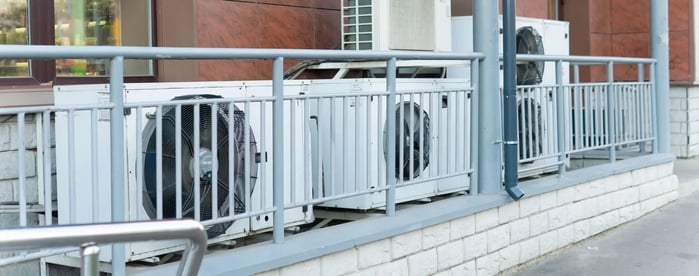
Introduction: The Growing HVAC Challenge in North Carolina Schools
North Carolina school HVAC failures are becoming increasingly common, impacting student comfort, learning environments, and operational costs.
With aging infrastructure and rising energy demands, school administrators and facility managers are under pressure to ensure that classrooms meet comfort and safety standards while complying with the North Carolina energy code for schools.
Poor indoor conditions can affect not only student performance but also teacher satisfaction and staff productivity, making it essential to address HVAC issues proactively.
Common Causes of HVAC Failures in Educational Facilities
Understanding why HVAC systems fail in schools is the first step toward resolving the problem. Some of the primary causes include:
- Aging equipment and outdated systems: Many school buildings in North Carolina still operate on HVAC units installed decades ago, which struggle to meet modern classroom ventilation requirements in NC.
- Poor installation or MEP coordination: Inefficient MEP coordination for school construction often leads to undersized ducts, improper airflow, and mismatched equipment.
- Inadequate maintenance programs: Without preventive maintenance, systems deteriorate faster, leading to frequent breakdowns.
- Climate-specific issues: North Carolina’s humid climate stresses HVAC systems, making humidity control in schools a critical factor for durability and IAQ.
Impact of HVAC Failures on Schools and Campuses
The consequences of failing HVAC systems go beyond mere discomfort. Key impacts include:
- Disrupted learning environments: Students in classrooms without proper cooling, heating, or ventilation face concentration challenges, directly affecting academic outcomes.
- Rising energy bills: Inefficient systems can significantly increase energy use — HVAC equipment typically accounts for 50-65% of a school’s total energy consumption, and schools often waste 25-35% of that energy due to inefficiencies, leading to higher operational costs.
- Indoor air quality concerns: Poorly maintained HVAC units can harbor mold, allergens, and pollutants, impacting indoor air quality in North Carolina schools.
- Compliance and code risks: Schools that fail to meet school mechanical system code requirements risk violations, fines, and delayed occupancy approvals.
Why Proper MEP Design Prevents HVAC Failures
Investing in a comprehensive educational facility MEP design ensures that mechanical, electrical, and plumbing systems function as one coordinated infrastructure rather than isolated components.
In many cases, HVAC failures stem not from equipment defects but from poor planning, improper sizing, or lack of coordination during the design and construction phases.
A strategic MEP approach eliminates these risks early in the project lifecycle.
Integrated planning: Coordinating HVAC layout with electrical loads, plumbing routing, ceiling space, and structural constraints reduces installation conflicts and change orders.
Proper MEP coordination for school construction ensures adequate shaft space, balanced airflow distribution, and efficient equipment placement—preventing airflow restrictions and premature wear.
Load calculations and right-sizing systems: Accurate HVAC load calculation for schools accounts for classroom occupancy, technology heat loads, ventilation requirements, and North Carolina’s seasonal humidity swings.
Oversized systems short-cycle and waste energy, while undersized systems operate continuously and fail early. Right-sizing extends equipment life and improves comfort consistency.
Energy modeling and efficiency optimization: Using energy-efficient school HVAC design strategies such as energy recovery ventilators (ERVs), variable refrigerant flow (VRF) systems, and smart building controls helps reduce long-term operating costs.
Energy modeling during the design phase allows school districts to forecast utility savings and make data-driven capital planning decisions.
Code compliance and IAQ considerations: Licensed mep engineers ensure systems meet school building HVAC compliance in NC, adhere to the North Carolina energy code for schools, and follow ASHRAE ventilation standards for schools.
Proper ventilation rates, filtration selection, and humidity control are integrated into the design, protecting occupant health while avoiding inspection delays or costly retrofits.
Get Expert MEP Design for Your School Facility
Our engineers design HVAC and MEP systems for educational facilities across North Carolina. Ensure reliable performance, energy efficiency, and full code compliance for your next project.

Best Practices for Energy-Efficient HVAC Upgrades in NC Schools
Upgrading HVAC systems is an opportunity to improve reliability, efficiency, and IAQ. Best practices include:
- Selecting modern, durable HVAC equipment: Investing in high-quality units extends system lifespan and reduces failures.
- Regular maintenance and monitoring systems: Implement predictive maintenance to catch issues early.
- Smart ventilation and humidity control solutions: Automated controls maintain consistent indoor conditions, vital for humidity control in NC schools.
- Planning for long-term scalability and upgrades: Future-proofing ensures the HVAC system can adapt to enrollment growth or changing regulations.
Case Studies / Examples of Successful MEP Solutions
For instance, a mid-sized school district in Charlotte partnered with Nearby Engineers to redesign its HVAC system. By implementing school HVAC system design best practices and integrating energy-efficient solutions, they reduced system failures by 45% and cut energy costs by 25% within a year.
Another example involves a higher education campus in Raleigh, where proper MEP design services for schools improved IAQ and ensured compliance with all school mechanical system code requirements.
Conclusion: Solving NC School HVAC Challenges Through Smart MEP Design
North Carolina school HVAC failures are a pressing issue that demands immediate attention. By investing in comprehensive educational facility MEP design, schools can prevent system breakdowns, optimize energy efficiency, and maintain high-quality indoor air standards.
Proper planning, including HVAC load calculation for schools, adherence to school mechanical system code requirements, and strategic selection of modern equipment, ensures long-term reliability and reduces operational costs.
School administrators, facility managers, architects, and construction planners can benefit significantly from collaborating with licensed MEP engineers to design systems tailored to the unique climate and building requirements of North Carolina.
Proactive upgrades and ongoing maintenance not only safeguard the learning environment but also demonstrate a commitment to student health, staff productivity, and sustainable facility management.
Taking these steps today will ensure that North Carolina schools enjoy efficient, compliant, and resilient HVAC systems for years to come.
Planning an HVAC Upgrade for Your School?