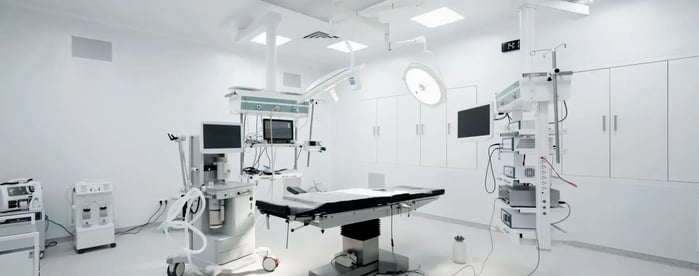
Healthcare projects in California face one of the most rigorous approval processes in the construction industry. Whether you're designing a hospital expansion, ambulatory surgery center, or medical office renovation, the HCAI plan review process plays a critical role in project success.
Yet many architects, developers, and engineers find themselves asking the same questions:
"Why does HCAI keep kicking back our drawings?" or "What are the most common HCAI review comments?"
Every revision cycle can lead to costly redesigns, delayed permits, and extended construction schedules.
Understanding the most common reasons behind HCAI revisions can help project teams improve healthcare MEP design in California projects and streamline approvals.
Why HCAI Reviews Healthcare MEP Drawings So Closely
The California Department of Health Care Access and Information (HCAI) reviews healthcare projects to protect patient safety, maintain life safety compliance, and ensure facilities remain operational during emergencies.
Unlike traditional commercial projects, healthcare facilities must comply with stringent California healthcare building codes, seismic standards, infection control requirements, and emergency system regulations.
As a result, even minor documentation gaps can trigger review comments and additional review cycles.
According to HCAI's Facilities Development Division, thousands of healthcare construction projects undergo plan review annually, making thorough documentation and coordination essential for successful approvals.
7 Common Reasons HCAI Returns Healthcare MEP Drawings
1. Incomplete Design Documentation
One of the most frequent causes of HCAI review comments is incomplete documentation.
Missing equipment schedules, incomplete specifications, undefined system narratives, and absent design calculations often raise questions during review. HCAI reviewers need sufficient information to verify code compliance and operational performance.
Projects with incomplete construction documents typically experience additional review cycles and unnecessary delays.
2. Poor Coordination Between Architectural and MEP Drawings
Many healthcare projects suffer from healthcare design coordination issues before they ever reach construction.
Common problems include:
- Ceiling space conflicts
- Equipment access limitations
- Structural interference
- Conflicting dimensions between disciplines
This is where BIM coordination becomes invaluable. Early clash detection can identify issues before submission and significantly reduce redesign costs.
Many architects discussing healthcare permitting challenges ask:
"Are BIM clash reports helpful during HCAI review?"
The answer is YES—coordinated models help demonstrate a higher level of design accuracy and reduce avoidable comments.
Industry Insight
According to the official HCAI Facilities Development Division, healthcare projects must demonstrate compliance with detailed building safety, structural, and engineering requirements before approval.
3. Missing Seismic Bracing Information
California healthcare facilities face strict seismic compliance requirements.
Mechanical equipment, piping systems, electrical components, and medical gas infrastructure must be properly anchored and braced. Missing details related to seismic restraint systems are among the most common hospital project permit challenges.
For healthcare projects, seismic design isn't simply a construction concern—it's a critical component of operational resilience during emergencies.
4. Life Safety and Emergency Power Deficiencies
Healthcare facilities depend heavily on emergency power systems and backup infrastructure.
HCAI frequently identifies issues involving:
- Essential electrical systems
- Generator connections
- Emergency distribution equipment
- Critical branch loads
Because hospitals must continue operating during power interruptions, incomplete documentation of emergency systems can trigger significant review comments.
This is especially important for facilities undergoing renovation or expansion where existing infrastructure may have limited capacity.
Reduce HCAI Review Comments Before They Impact Your Schedule
Avoid costly revisions caused by coordination gaps and compliance issues. NY Engineers helps healthcare project teams deliver coordinated MEP designs that support smoother HCAI approvals.

5. Medical Gas Design Errors
Medical gas systems are highly regulated components of hospital MEP design.
Common issues include:
- Incomplete riser diagrams
- Missing zone valve information
- Insufficient alarm documentation
- Coordination conflicts with architectural layouts
Even small omissions can create compliance concerns because these systems directly impact patient care and clinical operations.
6. HVAC Systems That Don't Meet Healthcare Requirements
Healthcare HVAC systems are subject to unique ventilation and infection control standards.
Review comments often result from:
- Incorrect air change rates
- Improper pressure relationships
- Missing filtration requirements
- Inadequate ventilation calculations
Since healthcare environments depend on controlled indoor air quality, hospital HVAC design compliance remains one of the most heavily reviewed aspects of healthcare engineering.
According to the U.S. Centers for Disease Control and Prevention (CDC), properly designed ventilation systems play a critical role in reducing airborne infection risks within healthcare facilities.
7. Inadequate Existing Conditions Assessment
Many healthcare projects encounter challenges because existing conditions are not thoroughly documented.
Project teams may discover:
- Insufficient electrical capacity
- Aging mechanical systems
- Utility conflicts
- Undocumented field conditions
These issues often lead to revisions during the HCAI approval process, especially when proposed designs rely on assumptions rather than verified infrastructure data.
How Architects and Engineers Can Reduce HCAI Review Comments
Successful healthcare projects start with proactive planning.
To reduce the likelihood of revisions:
- Conduct comprehensive existing conditions surveys
- Implement early multidisciplinary coordination meetings
- Use BIM clash detection throughout design
- Verify seismic requirements early in the project
- Thoroughly document medical gas and emergency power systems
- Perform internal quality-control reviews before submission
Project teams that prioritize healthcare code compliance, detailed documentation, and coordination typically experience fewer review cycles and faster approvals.
For healthcare projects in California, partnering with experienced healthcare MEP engineering consultants can also help address complex compliance requirements before submission.
Conclusion
Most HCAI revisions are preventable. In many cases, review comments stem from documentation gaps, coordination challenges, or incomplete compliance information rather than major design flaws.
By prioritizing MEP design as per HCAI healthcare regulations, early coordination, thorough quality control, and code-compliant engineering, architects and developers can reduce review cycles, minimize project delays, and improve approval outcomes.
For healthcare facilities, faster approvals mean fewer disruptions, more predictable schedules, and a smoother path from design to construction.